Reviewing Quilting Swirls for Professional Business Use
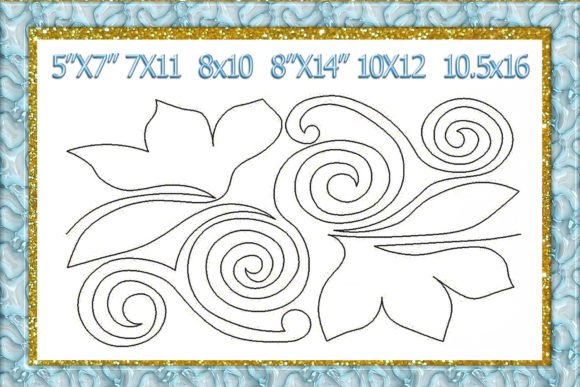
As an embroidery designer working with small businesses every day, my first task with any new machine embroidery design is to evaluate its practical potential for branded merchandise. When I first looked at the Quilting Swirls design, my impression was one of classic, handmade charm. The description suggests a “touch of whimsy,” which aligns perfectly with brands that want to feel friendly, approachable, and artisan-crafted. This isn’t a harsh, corporate geometric pattern; it’s a decorative, flowing motif that feels warm and inviting.
The Visual Personality of Quilting Swirls for Brand Identity
Quilting Swirls carries a rustic, decorative personality. For a small business, this can be a powerful tool. Imagine a local café, a boutique florist, or a handmade soap studio. Their brand identity often hinges on conveying care, craftsmanship, and a personal touch. Using this design as an embroidered patch on staff aprons or as a subtle sleeve detail on work shirts instantly communicates that handmade product ethos to customers. It elevates a simple uniform into a statement of brand values. However, its decorative nature means it should be used thoughtfully; it may feel too busy or informal for a law firm’s custom apparel, but for a creative studio or bakery, it could be the perfect accent that builds customer trust through visual consistency.
Real-World Application on Small Business Merchandise
Let’s walk through specific scenarios. For a pet brand or Etsy seller, Quilting Swirls could serve as a beautiful tote bag design, embroidered on the front pocket. It adds perceived value, making a simple bag feel like a premium, handmade product. As a cap embroidery design for a garden center or plant shop, it would provide a soft, natural aesthetic on the front panel. For apron embroidery in a small café, stitching it on the chest or along the bottom hem creates a branded, professional look for staff that still feels charming and non-industrial.
Consider it for product packaging accents as well. While you cannot directly embroider a cardboard box, this digital embroidery file can be used to create printable mockups for labels or tags attached to your products, ensuring your embroidery assets translate across all branded materials. For event merch or customer gifts, such as embroidered pillows or towels as suggested in the description, Quilting Swirls becomes a tangible piece of brand memorabilia that enhances buyer engagement.
Where Quilting Swirls Excels as a Branded Patch
The category of Backgrounds hints at its versatility. As a larger background element on a tote or the back of a chef’s jacket, Quilting Swirls can create a stunning, full-coverage look. For smaller applications, like a embroidered patch for a product label on a candle or a small logo on a knit hat, its continuous, flowing lines need careful evaluation. This is where my professional notes come in.
Practical Designer Notes and Considerations
Before running this design for any commercial embroidery project, here is my essential checklist.
- Test it in Black and White First: Stitch a sample using only black thread on white fabric and white on black. This tests the design’s fundamental integrity without color distraction. Does the swirl pattern hold its form? Does it look crisp?
- Check Performance at Small Patch Size: The description does not specify a minimum hoop size. For a cap front or a tiny product label patch, you must test a reduced version. Swirls can lose definition if the stitch density is too high for a tiny area, becoming a dense blob.
- Review Thread Color Contrast: On dark uniforms or bags, you may need bright, contrasting threads to keep the design visible. On light fabric texture, softer thread colors will enhance the whimsical feel.
- Inspect Spacing and Outlines: Look closely at the design’s spacing. Are the lines distinct enough to read clearly after repeated washing on a work shirt? Fuzzy, too-close lines can blur.
- Test on Real Project Fabrics: Do not judge by a sample on ideal fabric. Stitch it on the actual apron twill, cap mesh, or tote bag canvas you plan to use, with the correct stabilizer. Curved surfaces like caps can distort designs.
- Create a Mockup for Client Approval: Always provide a visual printable mockup showing Quilting Swirls on the proposed garment or product. Place it beside your client’s other design assets like their logo font to ensure visual harmony.
- Confirm Commercial Licensing: The product description mentions it comes with machine embroidery design files, but I must advise: always confirm the license terms for business use before production. Ensure you have the right to use it for your client’s small business merch.
Caution Areas for Business Application
While Quilting Swirls is lovely, some applications require caution. Its decorative, all-over nature might be overwhelming if placed too large on a cap embroidery front, competing with a primary logo. On items needing frequent, harsh washing—like kitchen staff uniforms—ensure your test sample withstands abrasion; very detailed outlines might fray over time. On textured fabrics like heavy knit, the swirls might not stitch as cleanly, requiring adjustments to stitch density or stabilizer choice. For ultimate professionalism, use it as an accent, not the sole brand mark, unless your brand’s core identity is entirely this decorative, handmade style.
Final Evaluation for Merchandise Value
In summary, Quilting Swirls is a strong embroidery file for businesses whose brand personality aligns with its rustic, charming aesthetic. It can transform a simple apron, tote, or uniform into a cohesive, branded finished product that feels intentional and valuable. It encourages customer recognition through a distinct, repeating visual motif. My final advice is to treat it as a serious design asset. Test it thoroughly in the contexts you intend to use it—as a patch, a chest accent, or a sleeve detail—and ensure it stitches cleanly at your required sizes. When applied correctly, it adds that crucial “touch of whimsy” not just as decoration, but as a strategic element of your brand’s story on every piece of merchandise you create.